
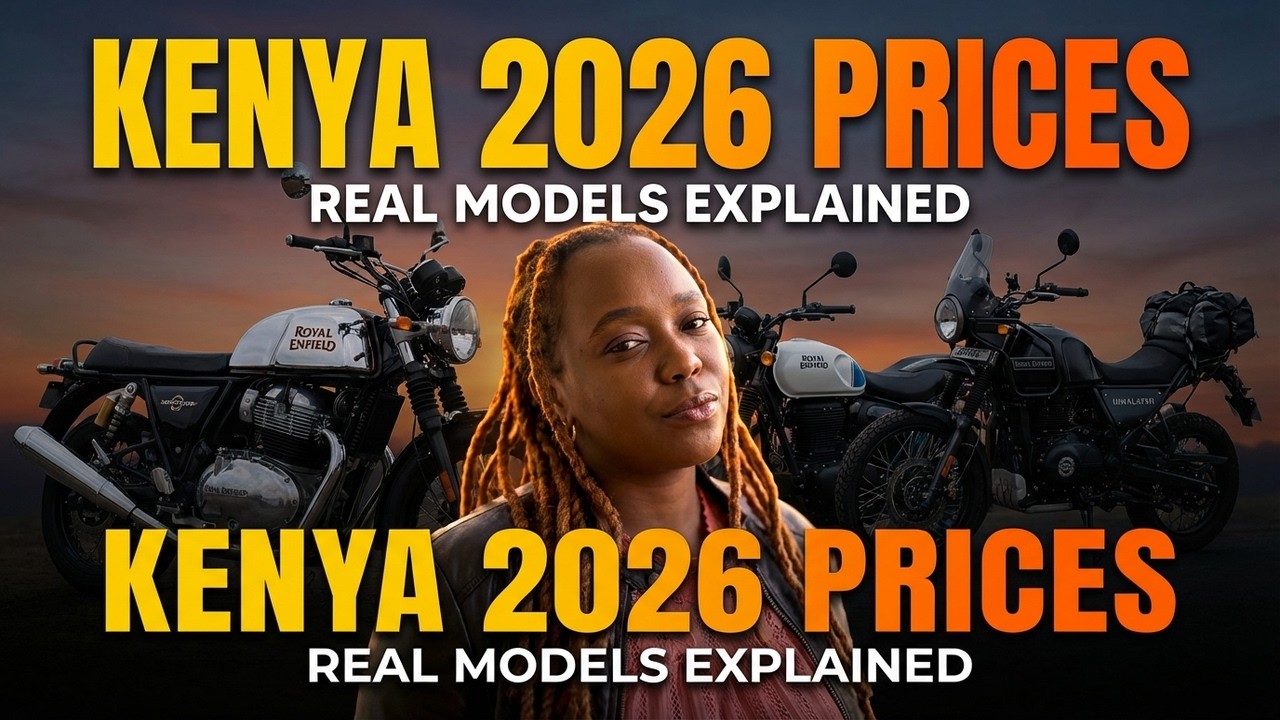
Buying a Himalayan 450, Classic 350 or Bear 650 in Kenya
Begin with the longest normal journey and the worst surface you actually use. This source-based guide accompanies the official Overdrive comparison topic; it does not identify the exact filmed trims or invent a presenter test. Research is current to 7 October 2026.
Decide which compromise is acceptable
| Choice | Why it may fit | Purchase question | |---|---|---| | Classic 350 | Traditional road-bike package; 349 cc/14.87 kW reference | Does its output suit your normal passenger/luggage requirement, and is your offered trim tube-type or tubeless? | | Himalayan 450 |230 mm clearance, 21 inch front and 200 mm travel reference | Can you manage the installed 825–845 mm standard seat or low accessory seat with touring luggage? | | Bear 650 |648 twin, 56.5 Nm and scrambler equipment reference | Can you manage 214 kg and the tube-wheel repair plan while accepting its shorter travel than the Himalayan? |
Technical comparisons use Classic's 2024 manufacturer reference, Himalayan's South Africa sheet and Bear'sROW manufacturer sheet. These reference values are not an exact VIN/build specification. Seat height alone does not establish a comfortable or secure fit.
Get three comparable written quotations
Current online Himalayan indications are Kaza Brown at KES 690,000 and Kamet White at KES 718,000. Hanle/tubeless amounts conflict on the same manufacturer Kenya page, so ask for a dated corrected quote. Classic 350 and Bear 650 Kenya selling prices remain unconfirmed. Do not convert an overseas retail price and call it the Kenyan on-road price.
Require the quote to identify build year, exact trim, VIN when allocated, installed seat, wheel/tyre construction, accessories, registration, delivery, taxes, warranty and first-service obligations. Cost protection and luggage separately. Ask for the manual matching that bike and confirm passenger seat, footrests and load limits rather than treating a display bike's accessories as standard.
Budget the first year
For a usable budget, multiply distance ÷ actual km/l by the current pump price, then add servicing, tyres, insurance, registration and protective equipment. EPRA's current review covers 15 September–14 October 2026; check the applicable town's displayed price. At an illustrative 3, 4 or 5 litres/100 km, a 1,000 km month consumes 30, 40 or 50 litres respectively. Those are planning scenarios, not measured consumption for any bike in this comparison. A verified Kenyan model-by-model total cost of ownership, insurance premium and depreciation series is unavailable.
The individual platform changes the service requirements. Ask for scheduled tasks and parts/labour costs over your expected annual distance, a tyre-pair price, chain-kit price and an itemised insurance quotation. Fuel economy figures in reference material are claimed under their own test conditions; they do not establish the result of a Kenyan tour with luggage. No model-specific Kenya depreciation figure is asserted.
Establish your support route
Ganatra's Royal Enfield Kenya site identifies the Rosslyn Riviera Mall showroom and service centre, opened on 8 October 2025, with trained technicians and a genuine spares operation. This establishes an identifiable support route. It does not establish the stock or delivery time of every part. Request written prices and lead times for the exact model's filters, brake pads, chain kit, tyres, clutch parts, fork seals and electronic components before buying. Warranty duration, service labour prices and countrywide recovery cover remain unconfirmed.
If you live away from Nairobi, identify the person and workshop responsible for normal service and warranty work. Obtain the order time for model-specific parts before an expensive tour. A dealer's statement that it sells genuine spares should lead to a concrete item/lead-time answer; it cannot by itself establish immediate stock of every component.
Check the bike before payment
For a new bike, have the workshop demonstrate instrument functions, ABS controls, cold start, lights, fluids, chain adjustment and tyre pressures. Check the exact wheel type and request the appropriate puncture kit. Assess pushing and parking the motorcycle on a slope before adding a passenger or bags. The Bear's engine size does not compensate for poor fit, and the Classic's smaller engine does not make its 195 kg reference mass negligible.
For a used bike, verify registration, seller identity and frame/engine numbers. Inspect service receipts, wheels, steering stops, forks, shocks, bearings, chain, sprockets, brakes and signs of crash repair. Use a competent mechanic for a cold start and inspection. Unrecorded maintenance and unexplained modifications deserve a price and repair decision based on the actual bike, not a generic reliability claim.
Prepare for the chosen route
For road use, section 103B of Kenya's Traffic Act requires a valid driving licence, third-party insurance, a helmet and a jacket with reflectors; the rider must provide the passenger's helmet and reflective jacket and may carry only one passenger. Check that the exact bike is registered and suitable for the intended use. Off-road marketing, a headlamp or a seller's verbal assurance does not establish public-road registration or approval.
Set fuel stops using actual consumption and reserve, practise the correct puncture repair and arrange recovery contacts. Adjust luggage and suspension only within the exact manual's instructions. The Classic, Himalayan and Bear each deserve their own fit, budget and route decision; there is no useful single buying price or range-wide motorcycle score.