
Start with identity, not colour
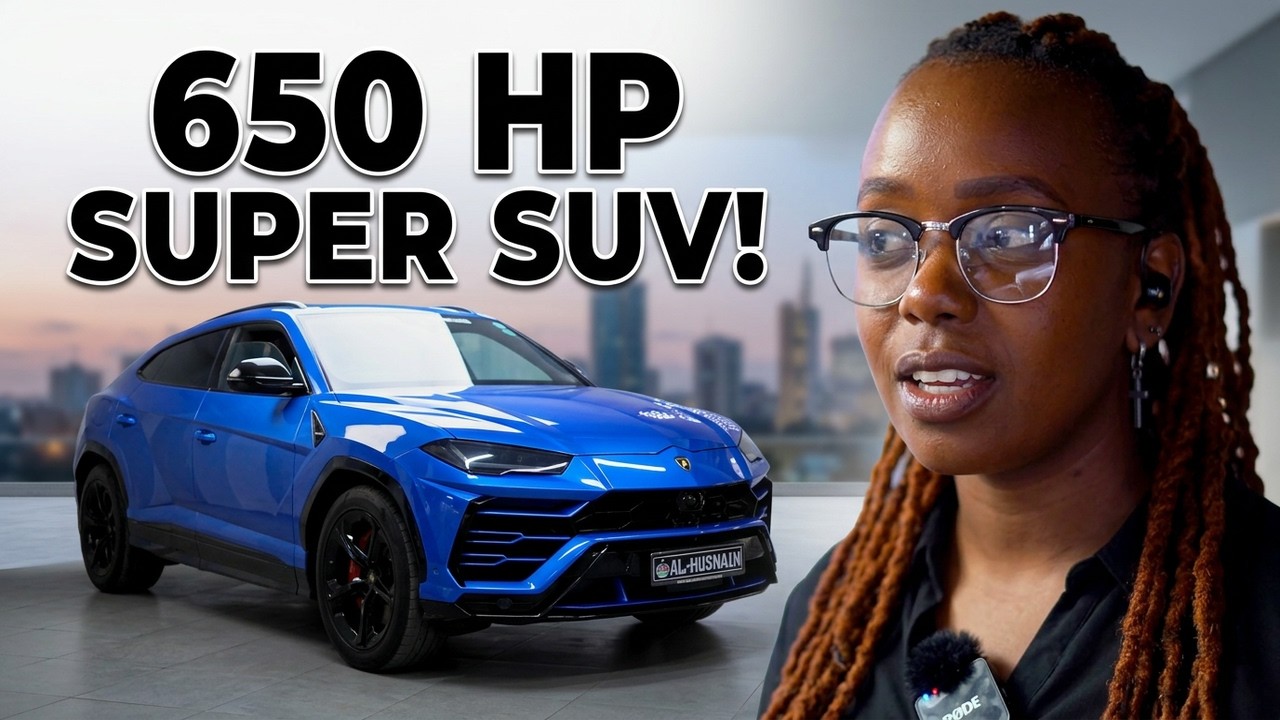
A Lamborghini Urus is an emotional purchase, but the buying process must begin clinically. The reviewed car is described in the Overdrive creator script as Blu Eleos with a black-and-white interior, 22-inch gloss-black wheels, red calipers, carbon-ceramic brakes, adaptive air suspension, panoramic roof and Bang & Olufsen audio. That is a useful visual description, not proof of year, derivative or original specification.
Ask for the VIN before travelling to view the car. Use it to confirm the model year, exact derivative, factory option list, market of origin and open service or recall campaigns. Compare the build record with the paint, interior, wheels, brakes and equipment physically present. A changed wheel or retrimmed cabin is not automatically a problem, but it must not be sold as factory specification without evidence.
The performance figures most commonly attached to the early Urus are 650 CV, 850 Nm, 0–100 km/h in 3.6 seconds and 305 km/h. They match Lamborghini's official original-Urus technical page. Later Urus derivatives differ, so do not paste those figures onto every car with the same body. The reviewed vehicle's VIN/build sheet must settle the matter.
Treat the advertisement as a lead, not evidence
A listing tells you what a seller wants you to believe. It does not establish clean title, correct mileage, tax status, accident history, specification or mechanical condition. Obtain copies of the logbook and import documentation, confirm seller identity and authority to sell, and verify the VIN on the vehicle against every document before any deposit. Use the proper Kenyan ownership-search and transfer process available at the time of purchase.
Search the VIN through appropriate manufacturer and history channels. Ask where the car was first delivered, when it entered Kenya and who maintained it. A stamped booklet by itself is weak evidence; request itemised invoices showing dates, mileage, workshop and work performed. Contact the issuing workshop independently where possible.
Pay for an independent inspection by a technician with appropriate high-end European diagnostic capability. A general visual check at the seller's yard is not enough for a machine combining a twin-turbo V8, air suspension, active roll control, rear-wheel steering, carbon-ceramic brakes and numerous networked modules.
Kenyan asking prices need context
When checked on 4 October 2026, MotorPlug carried a Nairobi 2020 Urus at KSh 48,999,999 and a 2019 example at KSh 47,999,999. These are two asking prices, not a formal valuation and not evidence of sale prices. They also do not identify the reviewed Blu Eleos vehicle.
Build a comparison set from several genuinely available cars, then adjust for model year, derivative, mileage, options, local registration status, service history, accident repairs, tyre and brake life and immediacy of maintenance. Phone sellers to confirm that listings are real and current; stale adverts distort the market.
Do not chase the lowest number. One set of correct tyres, neglected suspension work, electronics diagnosis or carbon-ceramic brake replacement can erase an apparent discount. The most valuable Urus is usually the one whose identity, history and condition require the fewest leaps of faith.
Inspection checklist
Before startup
- View the vehicle cold and tell the seller not to pre-start it.
- Match the VIN at every accessible location with the documents.
- Check panel gaps, paint depth, overspray, fasteners, glass dates and underbody marks for repair evidence.
- Inspect the lower front, side skirts, diffuser and jacking points for grounding damage.
- Verify all keys, books, tools, accessories and wheel-lock equipment.
- Confirm every advertised option against the build record.
Wheels, tyres and brakes
The featured car's 22-inch wheels look dramatic but leave limited sidewall protection. Inspect inner and outer barrels for cracks, welds and bends. Check every tyre's size, load and speed rating, brand, model, production date and sidewall. A matching set matters on a high-performance AWD vehicle. Uneven wear can indicate alignment, suspension or driving issues.
Do not assess carbon-ceramic brakes from colour or surface appearance alone. Have an experienced specialist measure and evaluate the discs using the correct procedure, inspect calipers and pads, and price any required work before negotiation. During the road test, check for pulling, vibration, warning lights and abnormal noise, while recognising that some brake noise can require expert interpretation.
Engine, cooling and transmission
Watch a true cold start. Listen for abnormal mechanical noise, observe exhaust smoke and note warning messages. Inspect for oil, coolant and charge-air leaks. Allow the vehicle to reach temperature and use live diagnostic data rather than relying only on the absence of a dashboard light.
The eight-speed automatic should engage promptly and shift cleanly in gentle use. Harshness, delay, shudder or warning messages require diagnosis, not a seller's explanation that the car is naturally aggressive. Verify cooling fans, temperature stability and the condition of hoses and reservoirs. Review maintenance records for mileage- and time-dependent work.
Suspension, steering and drive systems
Cycle the adaptive air suspension through every available height and leave the vehicle long enough to identify a corner that sinks. Check for compressor overwork, slow height changes, leaks, knocks and warnings. Test full steering lock at low speed and scan the rear-steering, active-roll, AWD, stability and drive-mode systems.
Use each ANIMA mode safely and confirm that the displays and vehicle settings respond without faults. Terra or Sabbia mode does not prove that a previous owner used the car responsibly off-road; underbody inspection remains essential.
Electronics and cabin
Test both centre touchscreens, instrument display, cameras, parking sensors, radar and lane functions, navigation, Bluetooth, all USB ports, climate zones, powered seats, seat ventilation or heating where fitted, windows, mirrors, tailgate, ambient lighting and audio. Operate the panoramic roof repeatedly and inspect headlining and drain areas for water staining.
A weak battery can create misleading faults across a modern vehicle, so test battery health and charging voltage. At the same time, do not allow every warning to be dismissed as 'just the battery' without a clean rescan and proof of repair.
Service and parts plan
The official Lamborghini dealer locator did not establish a Kenyan authorised outlet in the evidence checked for this guide. This is a verification issue, not a claim that competent support is impossible. Before buying, identify the exact workshop that will maintain the car and ask what factory-compatible diagnostic platform, current software access, technical data and specialist tooling it has.
Ask the workshop to quote a baseline service, inspection, diagnostic scan and likely next scheduled work. Establish the genuine-parts channel, freight method, taxes, typical lead time and policy for immobilised vehicles. Confirm where recalls or manufacturer campaigns would be completed. If the answer involves sending the car outside Kenya, cost and plan that route before ownership—not after a warning light appears.
Shared component ancestry does not mean every replacement part can be sourced as an ordinary Volkswagen Group item. Lamborghini-specific software, calibration, bodywork, trim, suspension and braking hardware can defeat casual substitution. Demand correct part numbers and documented work.
Calculate the real monthly burden
Lamborghini lists 12.7 L/100 km combined for the original Urus. EPRA set Nairobi's maximum super-petrol price at KSh 214.03 per litre for 15 September–14 October 2026. Multiplying those figures gives approximately KSh 2,718 per 100 km in fuel under the official consumption assumption. Real congestion and performance use may be much thirstier.
Build a one-year budget with fuel at a pessimistic consumption figure, comprehensive insurance, tracking and security, routine servicing, tyres, parking, detailing and a major-repair reserve. Then request actual Kenyan quotations. The correct reserve is not a token percentage borrowed from an ordinary SUV budget. It should reflect parts freight, specialist labour and the possibility that one event costs millions of shillings.
Confirm comprehensive insurance in writing before purchase. Disclose the exact vehicle, usage, drivers, storage and any modifications. Read limits, excesses, tracking requirements, approved-repair rules, valuation basis, theft conditions and whether imported or special-order parts are fully covered.
Road-test it like an owner
A useful road test is longer and less dramatic than a social-media clip. Begin in traffic, make tight parking manoeuvres, cross representative humps slowly, drive a rough but safe section, cruise at legal speed and complete several normal stops. Check visibility, width, low-speed smoothness, tyre noise, ride quality, tracking, cooling and screen usability.
Drive the exact routes that matter: home entrance, office basement, school or regular destination. The Urus is more usable than a low Lamborghini, but a wide body and 22-inch wheels can still make a badly designed ramp or pothole-rich road exhausting.
Only explore stronger acceleration in a legal, safe and controlled setting. Driver-assistance systems and AWD cannot make 650 CV harmless. If the seller encourages dangerous demonstrations, treat that as information about how the car may have been treated.
Who should buy one?
Buy a Urus if you want the Lamborghini experience, need real rear seats and luggage room, value its extraordinary performance and can support it without postponing maintenance. It makes particular sense for the buyer who would otherwise keep both a supercar and a luxury SUV but prefers one spectacular daily-capable machine.
Walk away if the purchase consumes the maintenance reserve, if a verified support route is missing, if the history is incomplete or if the seller resists diagnostics and independent inspection. Also reconsider if privacy, low attention and predictable costs matter more than theatre.
The Urus is unusually complete, but it rewards discipline. Verify the exact derivative, buy history and condition rather than appearance, and secure service, insurance and parts plans before delivery. The exciting part is pressing the starter. The intelligent part happens before money changes hands.